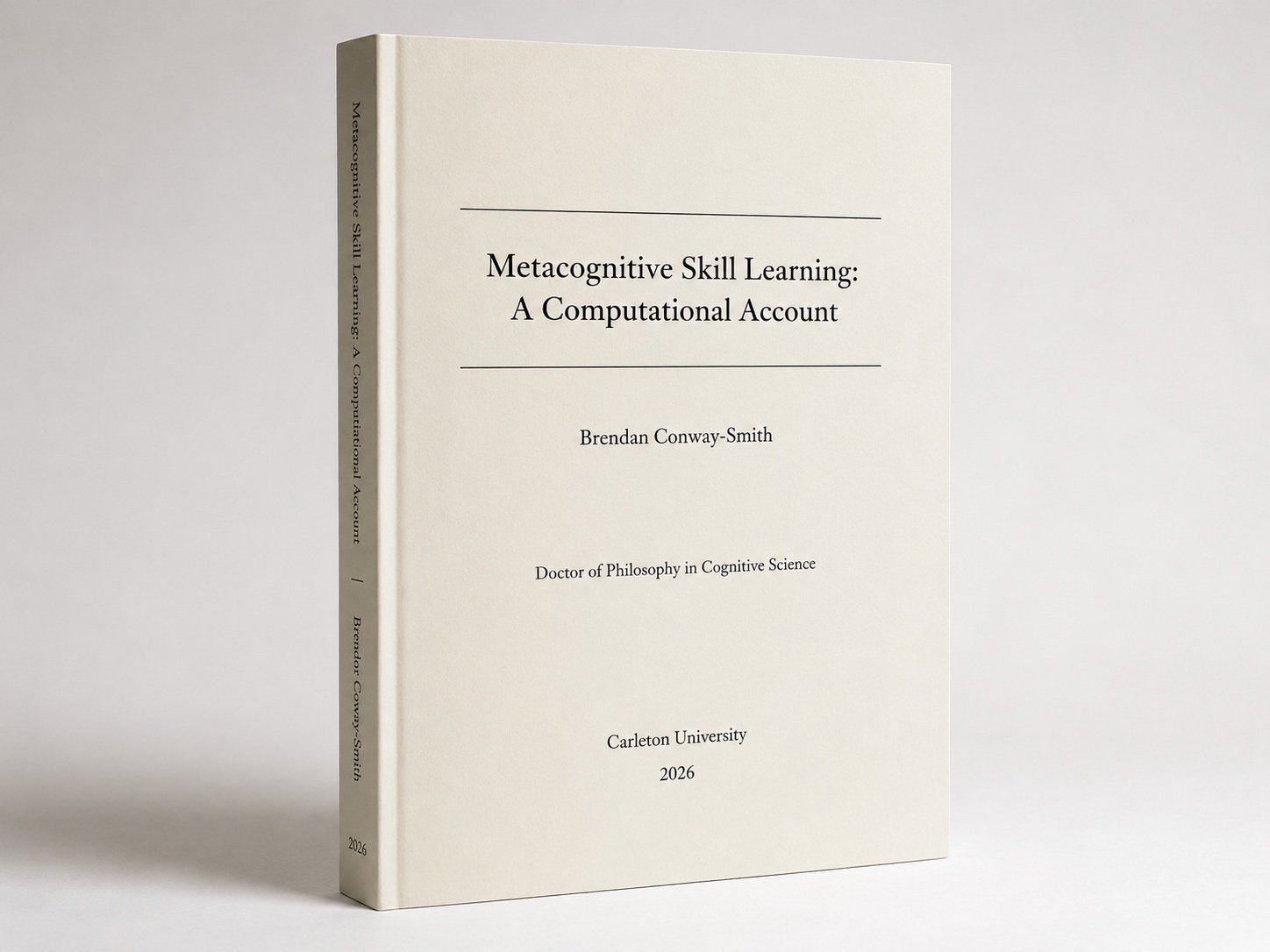
PhD Thesis: Metacognitive Skill Learning
Abstract
This dissertation presents the first formal theory of metacognitive skill learning. Metacognition, the capacity to monitor and control one’s own cognitive processes, has been widely studied, yet the field still lacks a theoretical framework explaining how metacognitive abilities are learned. This gap limits progress in both theory and application across fields such as cognitive science, education, therapeutic practice, and artificial intelligence.
The account developed here builds on classic models of skill acquisition from perceptual-motor and cognitive domains. It proposes that metacognitive skill develops primarily through proceduralization, whereby explicit, effortful metacognitive processes are transformed through practice into implicit, automatic routines.
The explanatory power of this theory is shown by its ability to unify diverse phenomena, including attentional training, emotion regulation, the metacognitive threshold, and detached mindfulness. The result is an integrated, mechanistic account of metacognitive skill that organizes existing findings, generates testable predictions, informs the design of AI, and supports the strengthening of metacognitive skill in everyday life.