
PUBLICATIONS
Conway-Smith, B., Potash, R. M., & Sacchet, M. D. (2026). Metacognitive skill learning as a mechanism of advanced meditation. PsyArXiv. https://doi.org/10.31234/osf.io/n58gy_v1
Conway-Smith, B. (in press). Adaptive Metacognition in AI: From Monitoring to Learned Control. In AAAI Fall Symposium on Artificial Metacognition (METACOG-26).
Conway-Smith, B., & Kassabri, N. (2026 in press). Dual-Process Metacognition: Modeling System Interaction. In Proceedings of ICCM 2026 - the 24th International Conference on Cognitive Modelling.
Askin, D., Hadar, G., & Conway-Smith, B. (2026). Enhancing Metacognitive AI: Knowledge-graph Population with Graph-Theoretic LLM Enrichment. arXiv. doi.org/10.48550/arXiv.2605.16676 . pdf
Conway-Smith, B., & West, R. (2025). Metacognition in HCI: Designing Systems for Planning and Flexibility. Adaptive Instructional Systems (Vol. 15812, pp. 176–187). Springer. pdf
Conway-Smith, B. (2025). Metacognition as a Domain of Skill. In Proceedings of the Annual Conference of the Cognitive Science Society (Vol. 47, pp. 2646-2653). pdf | video
Conway-Smith, B., & West, R. (2025). Metacognitive Mechanisms of the Attentional Training Technique. In Proceedings of ICCM 2025, 23rd International Conference on Cognitive Modelling (pp. 14-20). pdf
Conway-Smith, B., & West, R. (2024). The Computational Mechanisms of Detached Mindfulness. In Proceedings of ICCM 2024, 22nd International Conference on Cognitive Modelling (pp. 43-39). pdf | video
Conway-Smith, B., & West, R. (2024). Toward Autonomy: Metacognitive Learning for Enhanced AI Performance. In AAAI Spring Symposium on Human-Like Learning in AI. pdf | video
West, R., Eckler, S., Conway-Smith, B., Turcas, N., Tomkins-Flanagan, E., Kelly, M. (2023). Bridging Generative Networks with the Common Model of Cognition. In AAAI Fall Symposium. pdf
Conway-Smith, B., & West, R. (2023). Metacognitive Threshold: a Computational Account. In Proceedings of ICCM 2023 - the 21st International Conference on Cognitive Modelling (pp. 70–75). pdf | video
Conway-Smith, B., West, R. & Mylopoulos, M. (2023). Metacognitive Skill: How it is Acquired. In Proceedings of the Annual Conference of the Cognitive Science Society (Vol. 45, pp. 2880-2887). pdf | video
Conway-Smith, B., & West, R. (2022). System-1 and System-2 Realized Within the Common Model of Cognition. In AAAI Fall Symposium: Thinking Fast & Slow and Other Cognitive Theories in AI. pdf | video
Conway-Smith, B., & West, R. (2022). Clarifying System 1&2 Through the Common Model of Cognition. In Proceedings of ICCM 2022-the 20th International Conference on Cognitive Modelling (pp.40-45). pdf
West, R., & Conway-Smith, B. (2019). A Computational Theory of Feeling. In Proceedings of ICCM 2019 - the 17th International Conference on Cognitive Modelling (pp. 295-300). pdf
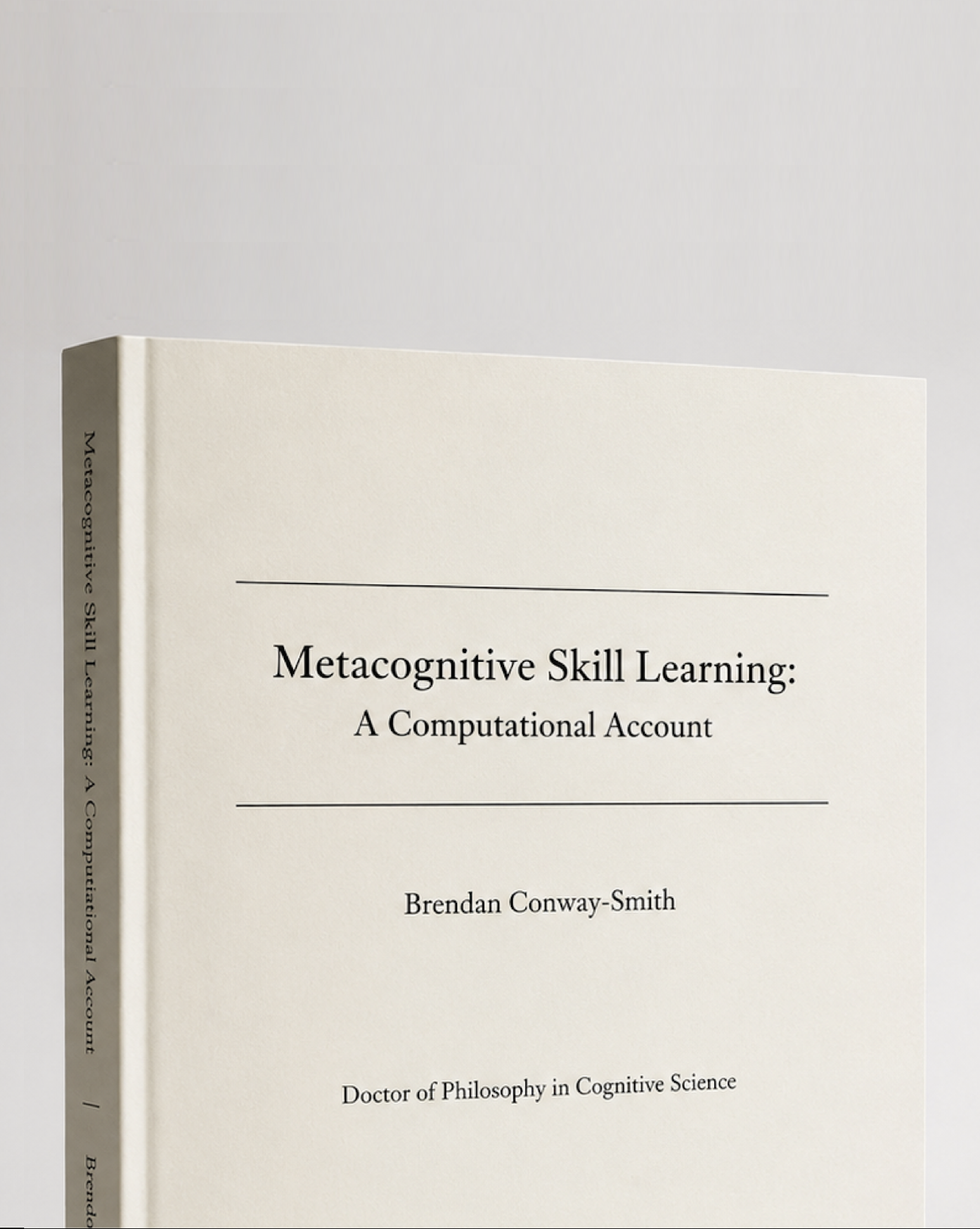
PhD Thesis: Metacognitive Skill Learning
This dissertation presents the first formal theory of metacognitive skill learning. The result is an integrated, mechanistic account of metacognitive skill that organizes existing findings, generates testable predictions, informs the design of AI, and supports the strengthening of metacognitive skill in everyday life.

How Metacognition - Thinking About Thinking - Can Improve the Mental Health Crisis
Our world is facing a global mental health crisis — one fueled by a sea of information and artificial stimulation. To survive and thrive in today’s world, we have to better understand our own minds - we need to improve our metacognition.

Al Canada’s AI future: Listen well to lead well
Oct. 5, 2026 - Government AI policy should reflect what Canadians want it to accomplish. Written by Alex Landry and Brendan Conway-Smith.
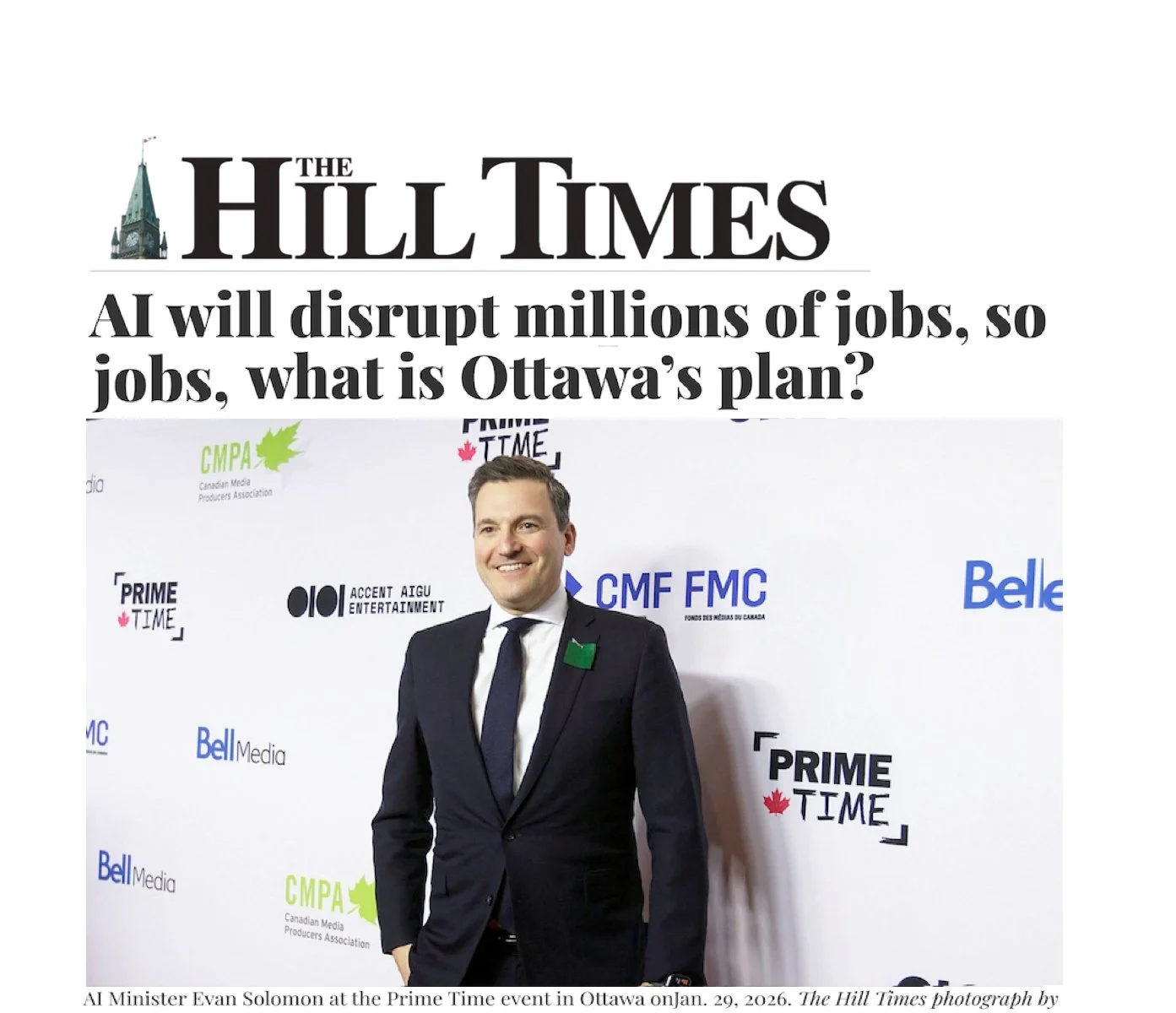
Al Will Disrupt Millions of Jobs - What is Ottawa's Plan?
Feb. 4th, 2026 - AI will disrupt millions of jobs, and Ottawa needs a real plan. Written by Alex Landry and Brendan Conway-Smith.
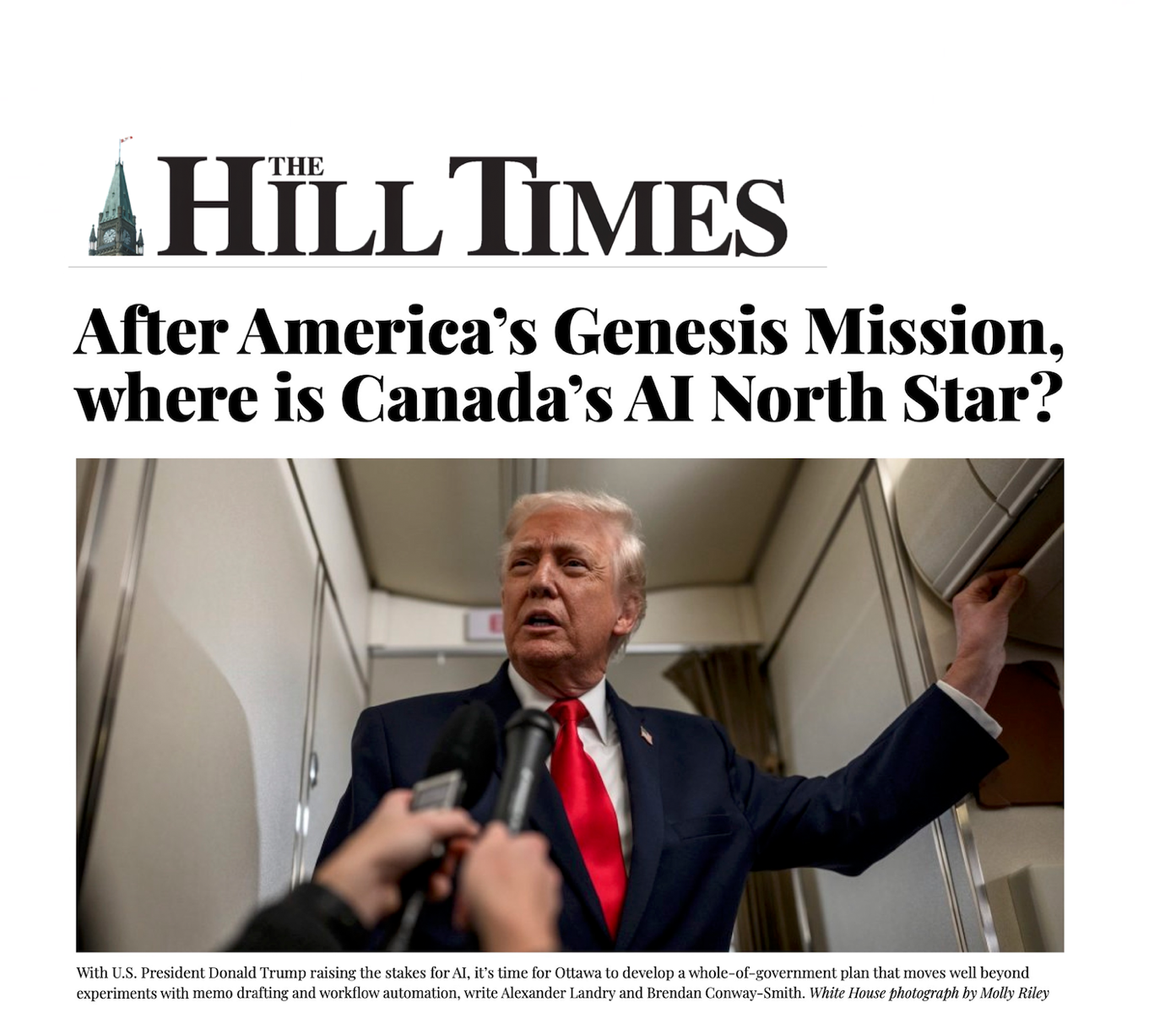
After America’s Genesis Mission, where is Canada’s AI North Star?
Dec. 17, 2025 - We argue that Canada needs to shift its priorities to implementing AI in defense, cybersecurity and critical infrastructures. Written by Alex Landry and Brendan Conway-Smith.

Canada’s AI Action Plan: Rewiring Government for Public Good
July 2nd, 2025 - We discuss ways in which Canada can use AI to strengthen governance and serve the public good. Written by Alex Landry and Brendan Conway-Smith.

Master’s Thesis: Clarifying Metacognition Through Computational Modelling
MA thesis: The intention of this thesis is to help clarify the nature of metacognition, its underlying mechanisms, and its implications for advancing a unified theory of metacognition.